
Gerard Vilarrassa, Product Manager at Kivnon
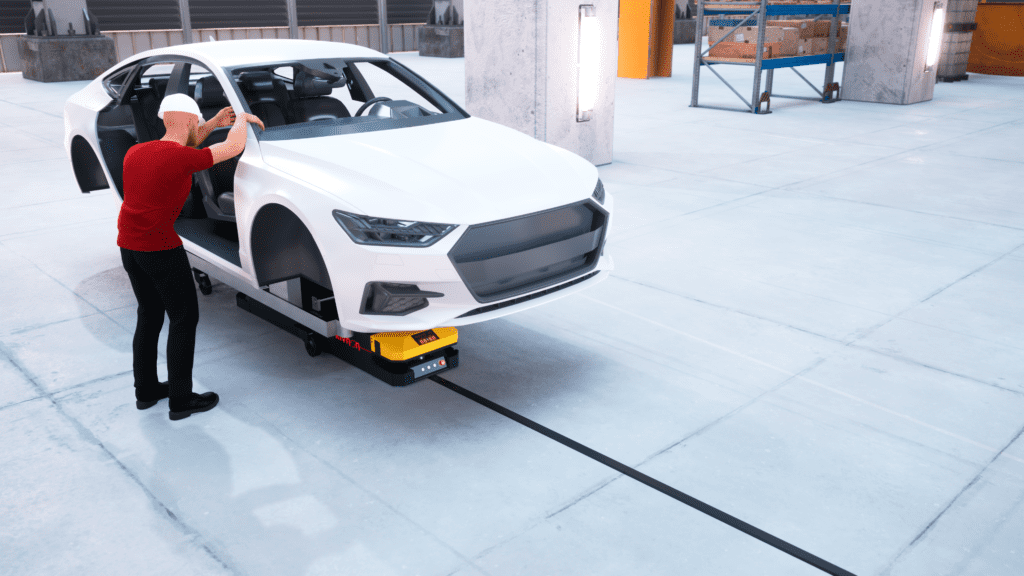
Mobile robots, such as automated guided vehicles and autonomous mobile robots, are self-driving vehicles that transport loads from one industrial operation to another.
The first generation of mobile robots improved efficiency by automating the picking process, transporting parts to a conventional conveyor line, and moving finished goods from the end of the production line to the warehouse for eventual shipment.
This automation improved productivity and ergonomics by eliminating the many steps that pickers or operators would otherwise have had to take.
However, as consumers began demanding greater product variety and faster delivery, fixed conveyor systems have inherent inefficiencies that make them less suitable for these emerging needs.
Their single-stream conveyor belt system also enforces strict assembly sequences. Even though they may be working on only part of the car, appliance, or whatever is on the line, line workers may have to sit idle while watching other sections of the product pass by.
If there is a delay upstream, downstream workers may have to sit idle while waiting for upstream operations to finish. All of this adds delays and costs to the operation.
Rethinking the assembly line as a network of distributed yet integrated mobile robots changes all that, taking manufacturing efficiency, flexibility, customization, and profitability to new heights.
Manufacturing system designers may also equip mobile robots with tools, such as robotic arms, to enable them to perform tasks.
Another factor contributing to increased efficiency is that robots can operate 24/7, maximizing production flow. They can perform repetitive tasks, minimizing human error that can lead to defects or rework.
Given the improvements in efficiency, flexibility, and customization, mobile robots represent a safer investment than a conveyor belt-based system for at least the following reasons.

Gerard Vilarrasa is the Product Manager at Kivnon. An electrical engineer with nearly a decade of experience in the industrial sector, most of which has been spent in mobile robotics product development and management at Kivnon.